
.svg)
Aerial Mapping Techniques for Precision

Advancing Precision Through Aerial Mapping
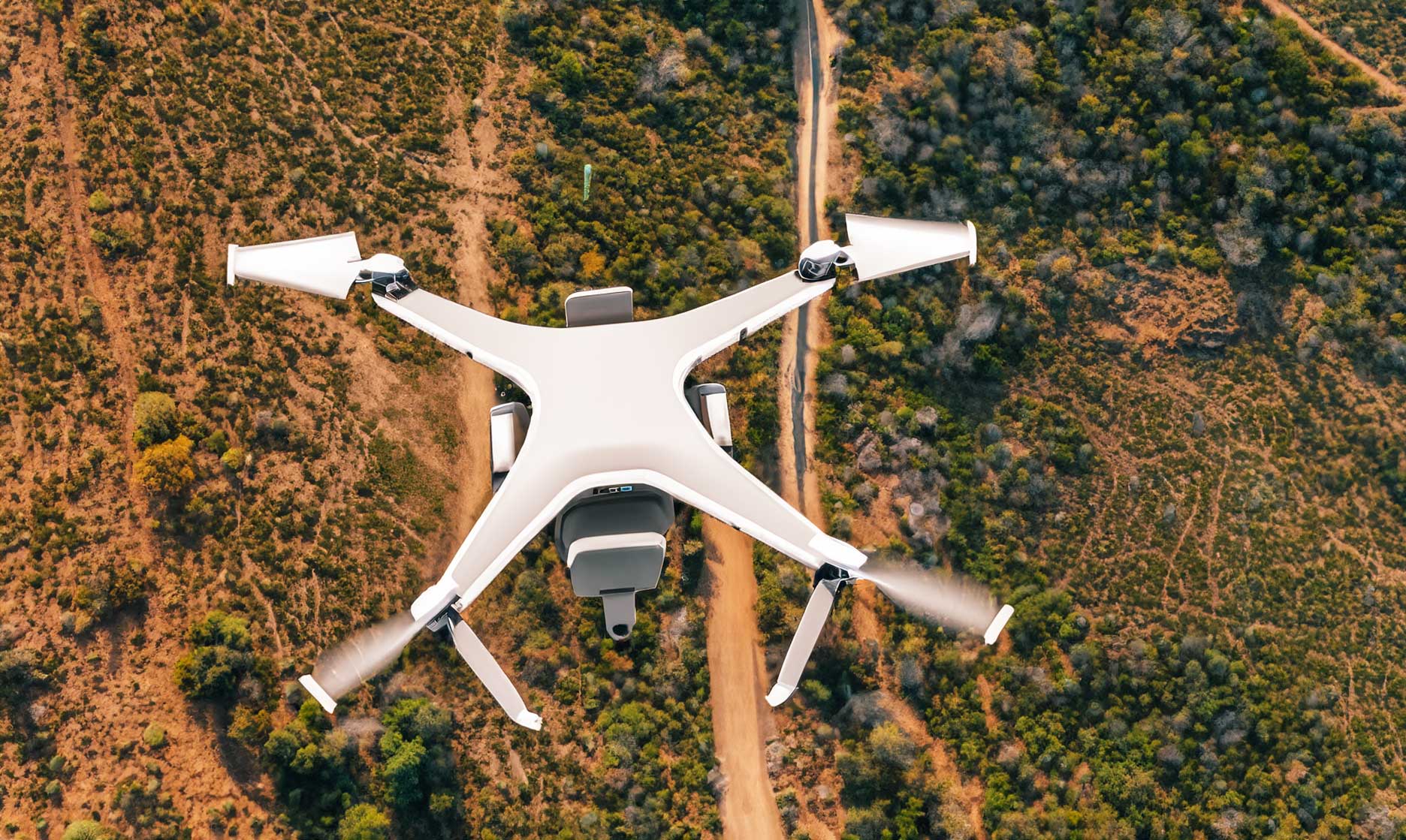
Aerial mapping with drones has redefined how professionals capture, measure, and analyze geographical data. Equipped with advanced sensors and high-resolution cameras, drones enable fast, accurate, and cost-efficient mapping across industries such as construction, surveying, agriculture, and environmental management.
The Fundamentals of Drone-Based Mapping
Drone mapping involves capturing overlapping aerial images from consistent altitudes and angles. These images are processed using specialized software to generate detailed orthomosaics, 3D models, and contour maps that serve as reliable baselines for measurement and analysis.
Photogrammetry for High-Resolution Mapping
Photogrammetry remains one of the most accessible and effective aerial mapping methods. It uses overlapping imagery to calculate depth, producing centimeter-accurate 3D surfaces. This technique is ideal for construction monitoring, land development, and infrastructure design where precision is critical.
LiDAR for Advanced Terrain Analysis
LiDAR technology (Light Detection and Ranging) enhances mapping accuracy by penetrating vegetation and capturing true ground elevation data. It is particularly valuable for forestry, mining, and floodplain analysis, where understanding terrain structure is essential.
Integrating Mapping Techniques for Comprehensive Insights
Combining photogrammetry and LiDAR provides both visual detail and structural accuracy. These datasets can be layered in GIS platforms to create comprehensive maps that support engineering, environmental, and planning decisions.
Applications Across Industries
Aerial mapping benefits multiple sectors—surveyors gain faster field data, engineers monitor project progress, and environmental scientists track land-use changes. In agriculture, mapping helps identify soil variations and optimize crop performance.
The Future of Precision Mapping
As drone sensors and AI-driven analytics evolve, aerial mapping will become even more automated and intelligent. Real-time mapping, cloud-based processing, and integrated 3D visualization will continue to raise standards for accuracy and accessibility.